Brick, Block & Sleeper Walls
Retaining Walls in Waterlooville & Hampshire
Free site visit and quote · We reply within 24 hours
Retaining walls in Waterlooville, Portsmouth and across Hampshire, built to hold back a slope so you get level ground you can actually use. We build them in brick or block, in sleepers held by steel posts, and with concrete posts and gravel boards, and we'll tell you honestly which one suits your garden or driveway.
On this page: the three kinds of wall we build, what decides the price, planning rules and drainage. Call 07813 073814 or send us photos with the quote form. A few photos of the slope are usually enough for a first conversation, and the site visit and quote are free.
What We Cover
- Brick or block
- Sleepers with steel posts
- Concrete posts and gravel boards
Inspiration
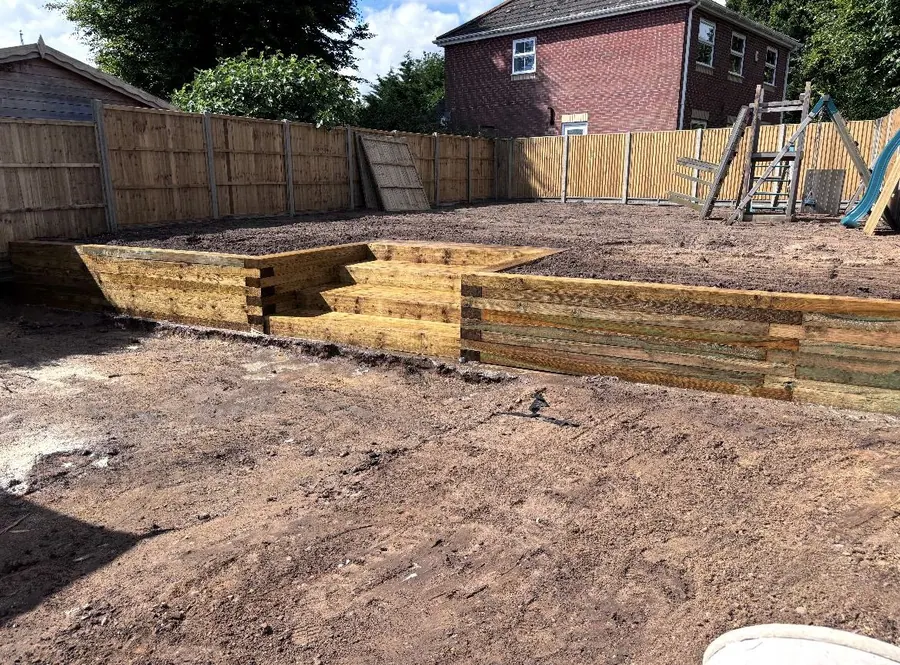
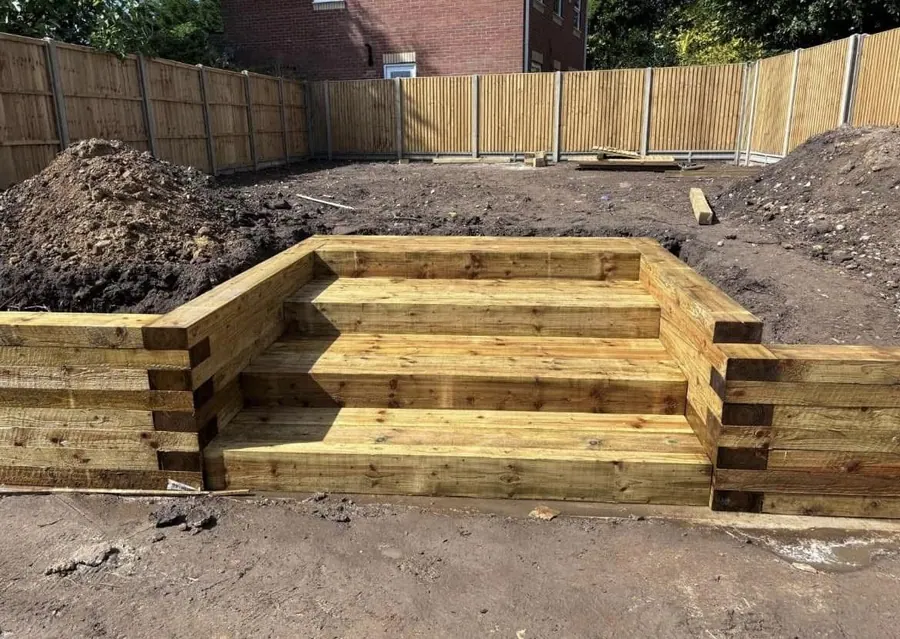
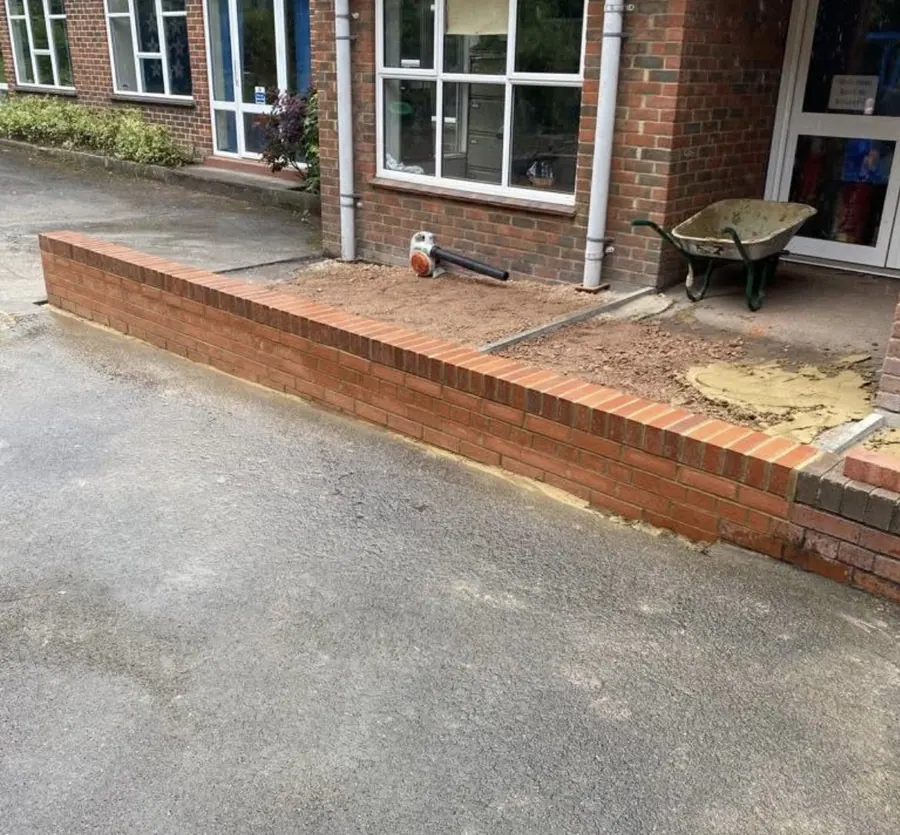
The Kind Of Work We Take On
Recent jobs in Waterlooville, Cowplain, Purbrook, Horndean, Clanfield, Denmead, Havant, Portsmouth, Southsea, Cosham, Drayton, Farlington and Portchester.
How the job runs
- 1
Call 07813 073814 or send photos with the quote form, and we reply within 24 hours.
- 2
We come out for a free site visit and give you one fixed price for the whole job, agreed before any work starts.
- 3
The same small team does the job from start to finish, with no subcontractors.
- 4
If the ground turns up something unexpected, we talk it through with you and give you the options before going further.
- 5
We leave everything tidy, and if something's not right, we come back and put it right.
What is a retaining wall, and do you need one?
A retaining wall holds back soil where the ground changes level, so a sloping garden or driveway can be turned into flat, usable space. You need one when the slope is too steep to regrade or plant, or when you want a level patio, lawn or parking area cut into rising ground.
A gentle slope often doesn't need a wall at all: it can be regraded and turfed or planted, and we'll say so if that's the better value. A steeper one usually works best as terraces, with a retaining wall at each level and steps tying them together. That's the kind of work described on our garden landscaping and groundworks pages.
Which type of retaining wall suits your garden?
We build three kinds: brick or block masonry, sleeper walls held by steel posts, and concrete posts with gravel boards. The right one depends on the height you need, the look you want and what the wall sits next to.
| Wall | What it looks like | Where it tends to suit |
|---|---|---|
| Brick or block | Solid masonry laid on a proper footing, in brick or concrete block | Walls next to a house, patio or driveway, where you want something permanent |
| Sleepers with steel posts | Sleepers stacked between steel posts for a softer, garden look | Terraces, raised beds and planted borders |
| Concrete posts and gravel boards | Gravel boards slotted between concrete posts, giving a neat, clean edge | Lower changes in level, often along a boundary or under a fence line |
We'll talk you through the choice on the free site visit.
Block retaining walls
A block retaining wall is built from concrete blocks laid on a proper footing. It's a solid, permanent choice where the wall sits next to a patio, a driveway or the house.
Sleeper retaining walls
A sleeper retaining wall stacks sleepers between steel posts set into the ground. It suits terraces, raised beds and gardens where you want the wall to feel part of the planting rather than a hard edge.
Our experience
The job we're proudest of recently included retaining walls: a full driveway renovation in Horndean, with car ports and retaining walls built as part of the same project. One team, one quote, start to finish. It's the same small team from the first visit to the last day, with no subcontractors, and we turn up when we say we will.
What affects the cost of a retaining wall?
The height and length of the wall, how much ground has to be dug out, the access, the drainage and the material all shape the price. Height, access and ground conditions usually move a quote more than the choice of material does.
We don't list prices, because two walls the same length can be very different jobs once you see the slope, the soil and how easy it is to get to. Instead you get one fixed price for the whole job, agreed before the work starts. If something unexpected turns up once the ground is dug, we talk it through with you and give you the options before going any further.
Which type of retaining wall costs the least?
There isn't one answer, because height, length, access and how much ground has to move usually matter more than the material. If you're working to a budget, tell us: we can suggest a different material, adjust the height or layout, or offer other ideas that get the look at a price that works.
Do you need planning permission for a garden retaining wall?
Most garden walls don't need planning permission, but a new wall does if it would be over 1 metre high next to a road used by vehicles, or the footpath beside it, or over 2 metres anywhere else. Permission is also needed at a listed building, or where an Article 4 direction or a planning condition has removed the right to build walls.
Garden walls don't need building regulations approval, but they must be structurally sound and maintained. If the wall is on or at the boundary with a neighbour, or means digging below and near the level of their foundations, you may need to tell your neighbour under the Party Wall Act.
Do you need a structural engineer for a retaining wall?
The Planning Portal lists walls retaining soil among the cases where you should seek expert advice, because its general guidance on wall heights doesn't apply to them. How much ground the wall holds back, and what sits above and below it, decide what the job needs.
We'll look at all of that on the free site visit and talk you through it before you commit to anything.
Why does a retaining wall need drainage?
Water that collects behind a retaining wall adds to the weight the wall has to hold back, so drainage is planned in from the start rather than added later. Where the water will go is one of the first things we look at on a site visit.
Can you level a sloping garden?
Yes. A sloping garden is usually levelled in steps rather than one flat plane, with a retaining wall holding each level and steps between them. It gives you usable ground for a lawn, patio or seating area where a slope only gave you a mower fight.
Areas we cover
We build retaining walls across Waterlooville, Cowplain, Purbrook, Horndean, Clanfield, Denmead, Havant, Portsmouth, Southsea, Cosham, Drayton, Farlington and Portchester, and the surrounding Hampshire area. See the areas we cover.
Questions people ask
Do you take on small retaining walls?
Yes. Small jobs are as welcome as big ones, and a short wall to level a border or a path is a normal job for us.
How do I get a quote?
Call 07813 073814 or send photos with the quote form. The site visit and the quote are free, with no obligation.
Can a retaining wall be part of a bigger job?
Yes. Walls are often built alongside a driveway, patio or garden project, like our Horndean driveway renovation, so one team handles the whole thing.
Jamie Rogerson · 25+ years on the tools
Ready To Get Started?
Got a slope you'd like to use? Call 07813 073814 or send us photos for a free, no-obligation quote.